Skip to content
MAYDUS
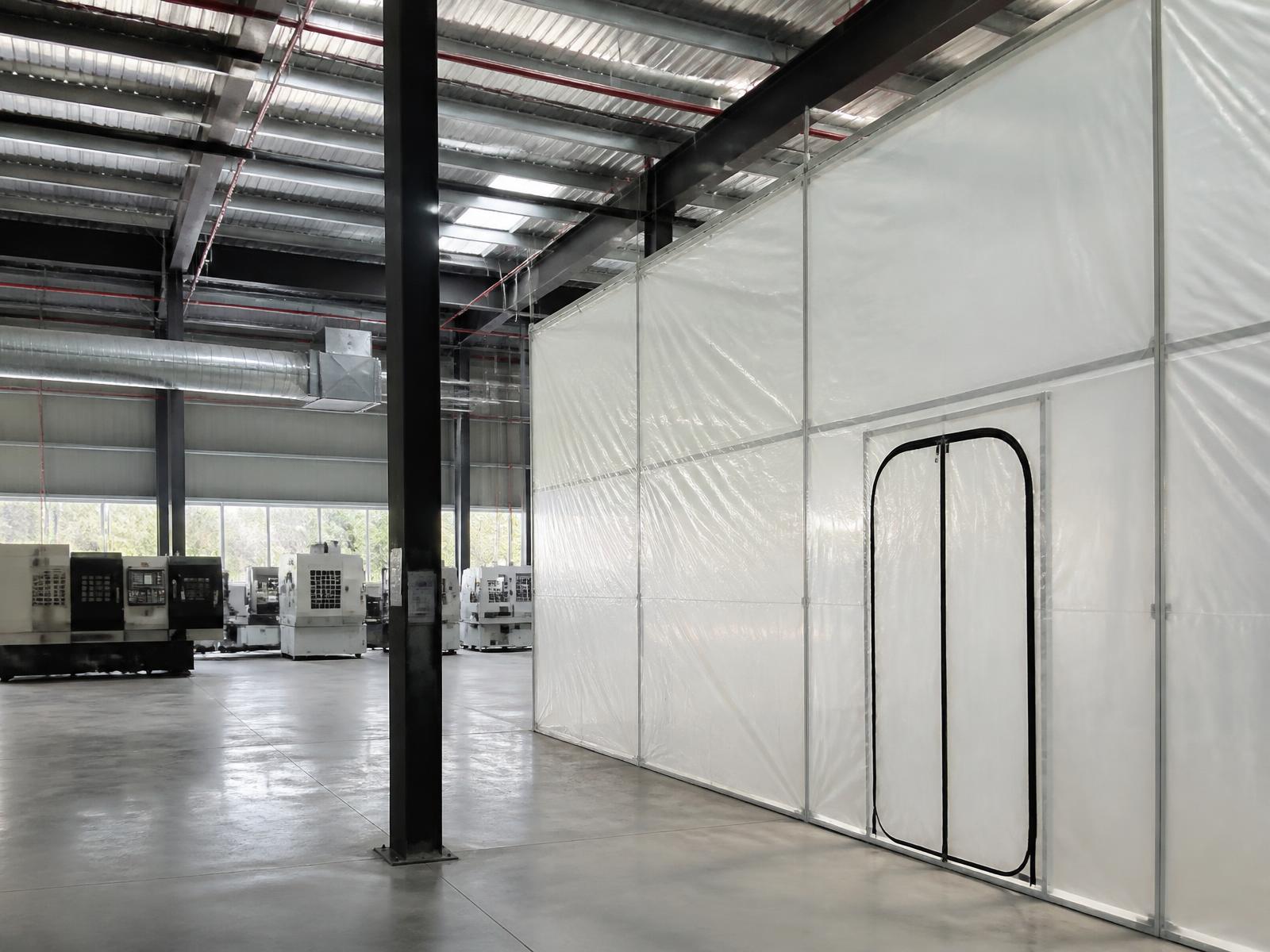
Manufacturing plant interior under renovation with temporary dust-containment partition, new ductwork and machine tools beyond

Manufacturing & Industrial

Construction planned around production, not in spite of it

Access routes, equipment clearances, utility interfaces, containment, and the shutdown windows a facility can actually release — these decide whether industrial work goes well.

Representative environment

The plan is written before mobilization

In an operating plant, the constraint is rarely the construction itself. It is where crews can walk, when a line can be released, how debris leaves without crossing production, and which utility can be isolated without taking something else down with it.

We map those constraints with your operations and maintenance teams first, then write scope, phasing, and containment against them. Shutdown windows become dated commitments with a defined return-to-service sequence.

The result is fewer surprises for your team: work that fits the hours you can give up, containment that holds, and a facility handed back clean at the end of each phase.

01

Active-facility renovations

Construction inside a running plant is a logistics problem before it is a trades problem. Access, laydown, protection, and debris routing are planned as scope, and every phase has a defined start condition and hand-back condition.

  • Phase plans tied to production schedules
  • Temporary partitions and negative-air containment
  • Dust, debris, and noise control planning
  • Protection of equipment and finished goods
  • Daily cleanup and documented hand-back
  • Coordination with plant EHS and maintenance

02

Production-area construction & expansion

New lines, expanded footprints, and reconfigured process areas require early coordination between equipment vendors, utilities, and structure. We track those interfaces as a single set of decisions so procurement and field work are not waiting on unanswered questions.

  • Foundations, pads, and structural modifications
  • Equipment set, alignment, and clearance coordination
  • Process and utility rough-in coordination
  • Long-lead procurement tracking

03

Shutdown and turnaround work

Shutdown work is measured in hours. Pre-staged materials, confirmed manpower, sequenced hold points, and a written contingency for the item most likely to slip are what keep a window from turning into an overrun.

  • Hour-by-hour shutdown sequencing
  • Material and equipment pre-staging
  • Hold points, inspections, and sign-offs
  • Restoration and start-up support

04

Utility and MEP coordination

Compressed air, process water, power, exhaust, and controls interfaces are where industrial schedules usually break. Isolation points, tie-in windows, and temporary service needs are identified during planning rather than discovered in the field.

  • Isolation, lockout, and tie-in planning
  • Temporary power and service continuity
  • Exhaust, ventilation, and make-up air scope
  • Controls and instrumentation interfaces

Common questions

Questions we get asked early

Yes — that is the normal condition for this work. We plan around ongoing operations, coordinate shutdowns and critical interfaces, and sequence work to minimize avoidable disruption. The specific windows are agreed with your operations team before mobilization.

Keep reading

Related reading and capabilities

Start a conversation

Tell us the function. We'll build the solution.

No pitch, no pressure — just a conversation about what your facility or home needs next, and what we would want to confirm before anyone quotes a number.